Brussels Business: why Belgians help before they're friends

Not "are they helpful." I already know the answer to that one. Why is the harder question, and the one most internationals here never quite get around to asking, because most internationals here never get let in far enough to notice there's a question worth asking.
Here's my confidence going in, and I'll spend the rest of the piece trying to earn it with evidence instead of vibes: in the part of Italy where I grew up, the processes sort of work but the people are mostly not there. In Belgium, it's the reverse. The processes fail often, and the people show up anyway.
I hear internationals complain about Belgian customer service all the time. About administrations that make you repeat your story four times. About the general chaos of dealing with anything official here. I understand the complaint. The processes really are messier than what I grew up with. But I don't think I, specifically, have standing to make it, because the alternative I know from Italy isn't "smooth process, warm people." It's process that's supposed to work, and often, nobody home.
And I think the people who complain the loudest that "Belgians don't help like that" have simply not given it enough time. Belgians, in my experience, are slow to open a door. That's true, and it's a real, documented fact of dealing with this country. But slow to open the door is not the same claim as cold behind it. Most people give up before the door opens at all. They never find out what's on the other side.
Four screenshots
Here is my evidence. Four screenshots on my phone, collected over the last few months without meaning to - and they're not even all the experiences I had, but only the most recent ones!
Only one of the four is a close friend of mine. The other three are people I'd describe as acquaintances, business contacts I've crossed paths with a handful of times, nothing more.
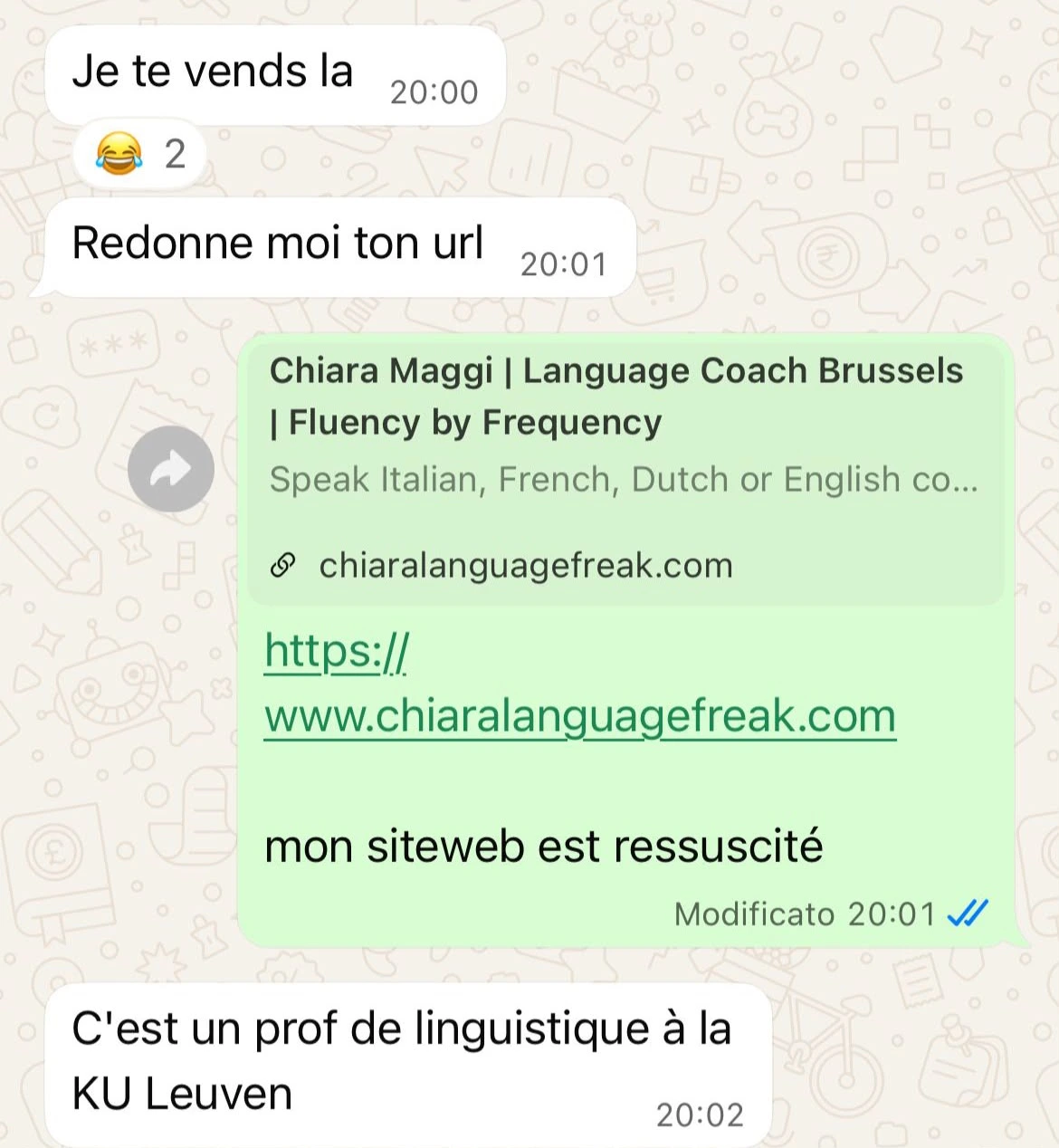
My close friend, hearing that I was fixing some parts of my website, talked about me with a university linguistics researcher within minutes, unprompted, with no framing beyond: here is a person, here is why they matter to you.
Another, someone I know from a meetup and hadn't seen in months, saw a single LinkedIn post I'd made about my work and sent back a detailed, unsolicited breakdown of intellectual property protection, including how to reserve a domain properly, plus an offer to talk further if I had questions.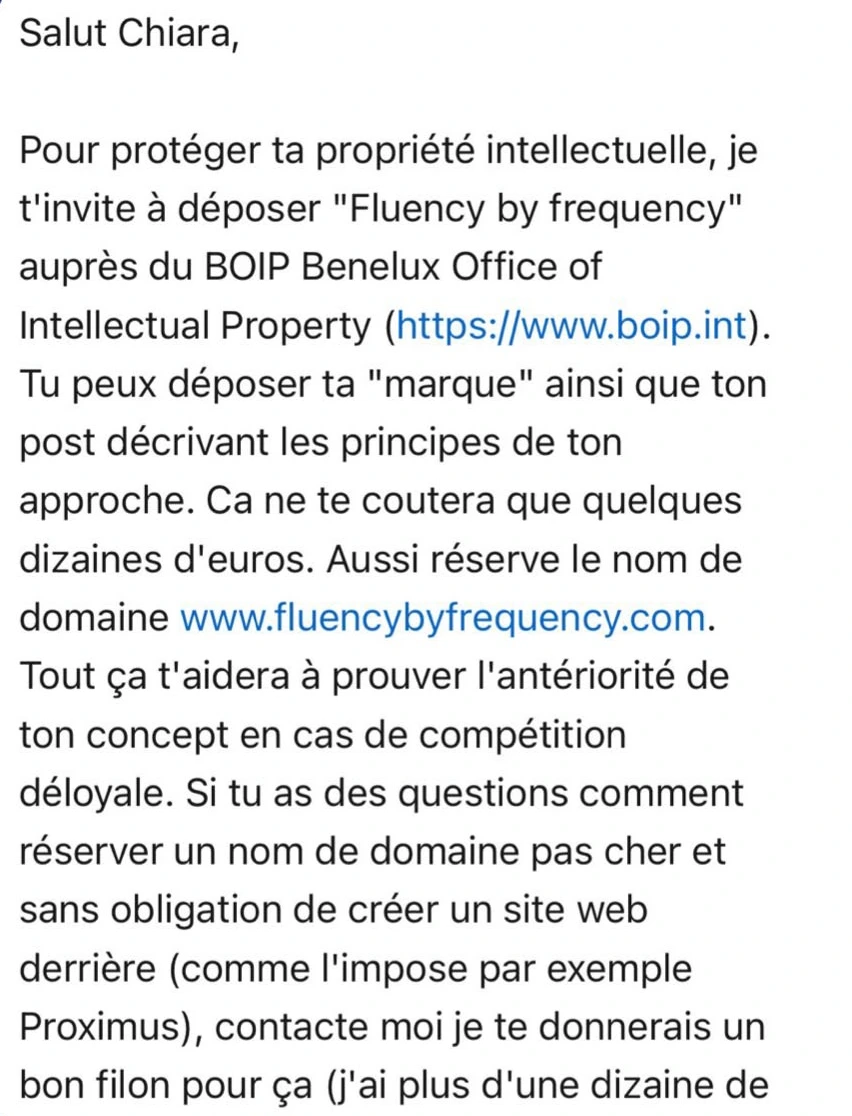
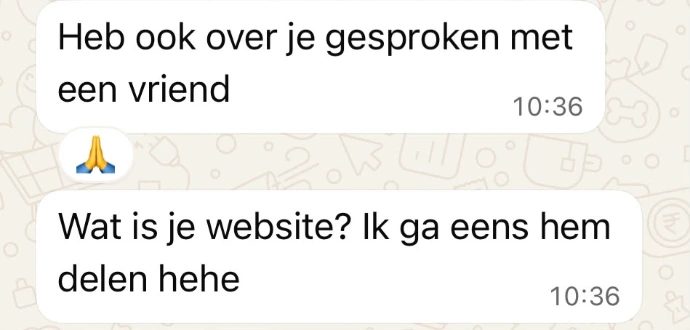
A third, someone I'd met only a couple of times, at an event about AI and one about startups, immediately remembered my business model and asked for my website link so he could share it.
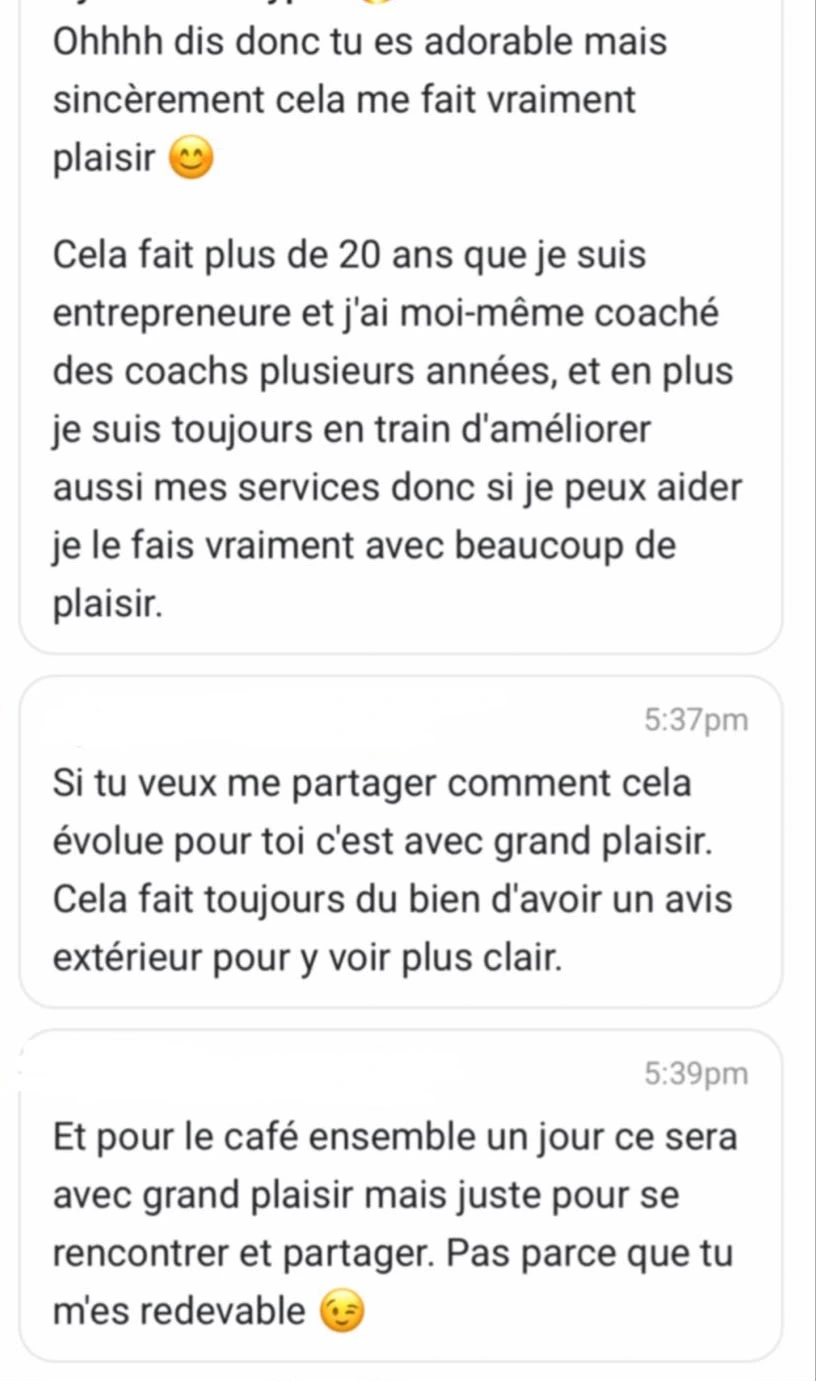
And a fourth acquaintance I barely know offered to be a long-term sounding board for whatever I build next, adding one line in French that I keep coming back to: pas parce que tu m'es redevable. Not because you owe me anything.
Why this happens
Not all of these people are from Brussels. But they're all very Belgian.
None of the three acquaintances owed me anything, in any accounting sense. We hadn't always built the kind of relationship that produces this, at least not yet. That's what makes the pattern interesting instead of just nice: the help arrived before the friendship did, in some cases, not after it.
So, why? I have a partial answer, and I want to be upfront that it's partial. I think it has something to do with the size of the networks here: small enough that a reputation for genuine generosity travels fast and cheaply, and costs almost nothing to maintain. I think it also has something to do with a culture that runs, informally, on the kind of trust the formal systems here can't always be relied on to provide. Belgians, maybe, have had more practice being the reliable thing when the process isn't.
I'm not fully certain of either theory. What I'm certain of is the four screenshots, and what they add up to: they make me happy to be living here.
Complements, not compliments
There's an idea I ran into recently, thanks to Seth Godin's newsletter, about the difference between a compliment and a complement. A compliment costs nothing and changes nothing about your situation.
A complement is the harder thing: understanding what someone is actually trying to build, and handing them the one specific piece they were missing, whether that's a name, a piece of legal knowledge, or a promise made good before it was even asked for.
None of my four screenshots are compliments. Each one filled a specific gap I hadn't announced I had.
And this, more than the mussels or the chocolate or any of the postcard version of this country, is the actual reason I've come to love Belgians the way I do. Once they let you in, they don't compliment you. They complement you. And in the accounting that actually matters, that's worth infinitely more.